
Attic Whispers from The Blue Mountains; Fact or Fiction #6
[August 2026 Edition]
The pope who needed a miracle
Greetings from my attic in the Blue Mountains, my friends!
In the last newsletter, I asked you whether Jewish forgers inside the Warsaw Ghetto substituted their own copies for original artworks, delivering perfect fakes to the SS while hiding the genuine paintings — and whether some of them signed their forgeries with hidden marks invisible to anyone who did not know where to look.
Here is your answer.
Fact. The historical record documents exactly this. Men working under conditions of unimaginable danger, with smuggled materials and borrowed time, produced forgeries of such quality that they passed SS inspection without question. Some of them did leave hidden marks — private signatures, invisible proofs of what they had done and who had done it. They knew they would probably not survive. They left the marks anyway.
I find that detail almost unbearable in the best possible way. The instinct to be known. To leave a trace. To say: I was here, and I did this, and it mattered. That instinct does not go away even when everything else has been taken.
It is one of the reasons I keep writing historical fiction. The history keeps showing me things about human nature that I could not have invented.
Now. Before I tell you about Book #4, here is today’s statement. This one travels back to the eleventh century — to a Persian physician and philosopher whose work cast a shadow so long that it reached across continents and centuries and changed the way the Western world understood the human body.
Ibn Sina — known in the West as Avicenna — wrote his masterwork Al-Qanun Fi Al-Tibb, The Canon of Medicine, in the early eleventh century. It was translated into Latin in around 1150 CE and became the primary medical reference text in European universities. It remained the standard teaching text in medical schools across Europe until well into the seventeenth century — more than five hundred years after it was written. Some historians of medicine argue that no single work in the history of the discipline has been more widely read, more extensively taught, or more consequential in shaping how physicians understood disease, diagnosis, and treatment. That a book written in Persia a thousand years ago could still be governing the education of European doctors in the age of Shakespeare is, depending on how you look at it, either a proof to its brilliance or a sobering comment on the pace of medical progress.
Fact or fiction?
The answer is coming in the next newsletter.
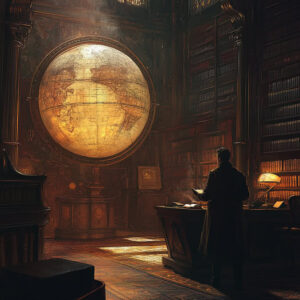
But first, let me tell you about Professor K: The Final Quest.
It begins where Book #3 ended — but it begins with a new urgency. A new crisis. A situation so delicate, so politically explosive, and so medically unprecedented that the people responsible for managing it have run out of conventional options. They need something that does not yet exist. And they need it quickly.
That is all I will say about the circumstances. Because the pleasure of this book is in watching the pieces come together — in understanding, gradually, just how many different worlds are about to collide.
What I can tell you is that Professor K: The Final Quest is the book where everything that was set in motion in Book #3 arrives at its destination. The science. The history. The secrets that have been protected across decades and continents by people with the power and the will to protect them. All of it converges here.
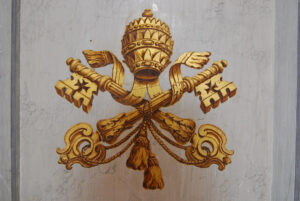
I want to say something about the Vatican, because it is central to this book and because I think it is one of the most misunderstood institutions in the world — not in a theological sense, but in a purely human one. The Vatican is an ancient organisation that has survived for two thousand years by being, simultaneously, an institution of profound spiritual authority and a very sophisticated political operation. Those two things are not in contradiction. They have always coexisted. And the tension between them — between what the Church believes and what the Church must do to survive — is one of the most dramatically rich territories I have ever written in.
Professor K: The Final Quest takes that tension seriously. It does not caricature the Church or its officials. It asks what happens when an institution built on faith is confronted with a scientific discovery that faith alone cannot explain — and that science, in its current state, cannot fully account for either.
That is the space where this book lives. Between what we believe and what we can prove. Between what medicine can do and what it cannot. Between the past that Professor K uncovered and the future that his discovery makes possible.
Jack Rogan does not belong in that space by training or by temperament. He is a journalist. He deals in facts. But the facts in this book keep opening onto questions that facts alone cannot close.
That is what makes it, for me, one of the most satisfying books I have written.
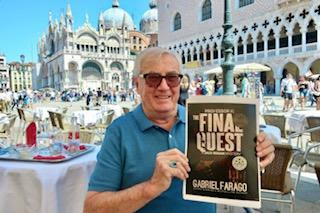
The answer to today’s question is waiting in the next newsletter.
Professor K: The Final Quest completes the story begun in Book #3. I recommend reading them back to back if you can. Together they form something larger than either one alone.
If you haven’t read Professor K The Final Quest, you can get it right here now: https://geni.us/ProfessorK-
P.S. Professor K The Final Quest, is Book #4 in the series. If you are reading in order, you are now deep enough into Jack’s world to understand what drives him. This book will test that understanding in ways you may not expect.
STAY SAFE, STAY CHEERFUL, and please STAY IN TOUCH.
Sincerely,
Gabriel Farago


